How Many Gluten Free Beers Can a Coeliac Drink?
It depends on the beer's real gluten level, which the label does not give you. At the 20ppm legal ceiling, under a pint hits the daily limit. For a properly low beer, three or four. Here is the maths, and why the 20ppm rule was never built for a pint.
By Si Walker · Updated 17 June 2026
If a beer is gluten free at 20ppm, how many can a coeliac actually drink?
It’s less about the ppm and more about the real gluten level in the beer. At the legal ceiling, a single pint of GF beer already passes the amount most coeliacs should stay under in a day. A beer that tests well below it leaves room for three or four. The label tells you the beer is under the limit. How far under decides the amount you can drink.
Here is the maths, where the daily figure comes from, and why 20ppm behaves differently in a glass than people assume.
How much gluten can a coeliac safely have in a day?
The most cited answer is 10mg (ten milligrams) a day. That is a hundredth of a gram, or about one three hundred and fiftieth of a slice of white bread. A few crumbs is the whole daily allowance.
That figure comes from a 2007 trial by Catassi and colleagues, published in the American Journal of Clinical Nutrition. Forty nine adults with coeliac disease, all on a gluten free diet, were given a daily capsule containing 0, 10 or 50mg of gluten for three months. The 50mg group showed clear damage to the gut lining. The 10mg group did not. That one study is why 10mg a day became the safe ceiling, and the number the whole gluten free labelling system is built on.
Two honest caveats sit underneath the headline. The first is that 10mg is a population average rather than a personal guarantee. A 2008 systematic review by Akobeng and Thomas found some patients developed gut changes at around 10mg a day, while others tolerated three times as much. The second is that more recent work has only pushed the cautious line further down. A 2023 dose response analysis in Nutrients estimated a small relapse risk even at 6mg a day and stressed that both the dose and the length of exposure matter. In 2025 an expert group convened by the FAO and WHO proposed a reference dose of 4mg of gluten for labelling decisions.
None of that overturns the 10mg figure. It just means treating it as a line to stay well under, rather than an allowance to spend.
What 20ppm actually means in your glass
“Gluten free” on a beer does not mean no gluten. It means under 20 parts per million. ppm is parts per million by weight.
A litre of beer weighs about a kilogram, and a kilogram is a million milligrams. So 20 parts per million is just another way of saying 20mg of gluten in every litre of beer. From there it is multiplication: scale that down to the size of the serving.
| Serving | Gluten at 20ppm |
|---|---|
| 330ml bottle | 6.6mg |
| 440ml can | 8.8mg |
| 568ml pint | 11.4mg |
A pint at the legal ceiling of 20ppm holds 11.4mg of gluten. That is already over the 10mg daily figure, from one drink, before a single mouthful of other food. A 440ml can lands just under, at 8.8mg, which leaves almost no room for anything else in the day. Two of them clears 17mg.
Most people never run this calculation. They see “gluten free”, read it as “no gluten”. But the label only tells you each beer is under a ceiling, and the milligrams add up with every pint.
Why 20ppm was never built for a pint
The 20ppm limit did not appear from nowhere. It was reverse engineered from the 10mg daily figure, using one assumption about how people eat.
The logic, set out in the Codex standard behind gluten free labelling, runs like this. Assume you eat around 500g of gluten free food a day, each item capped at 20ppm, which is 20mg per kilogram. Half a kilogram at that level works out at 10mg of gluten across the day. The whole limit depends on the gluten being spread thinly across everything you eat.
Now weigh a pint. 568ml of beer weighs about 568g, so at 20ppm it carries 11.4mg of gluten on its own. That is the entire daily budget the rule was built around, spent in one glass, with nothing eaten.
The 20ppm threshold was written for a slice of bread or a bowl of pasta, spread across a day’s meals. It was never written for something you drink half a litre of in one sitting.
So can a coeliac only have one beer? No
If every gluten free beer sat at 20ppm, the answer would be about one. Luckily they do not.
20ppm is the most gluten a beer can contain and still carry the label. Very few sit anywhere near it. The beers worth drinking test far below, and that changes the maths completely.
| Beer’s real gluten level | Gluten per pint | Pints to reach 10mg |
|---|---|---|
| 20ppm (legal ceiling) | 11.4mg | under 1 |
| 5ppm | 2.8mg | about 3.5 |
| 3ppm (near detection limit) | 1.7mg | about 6 |
| 0ppm (naturally gluten free) | none | no gluten limit |
At the top of that table you are rationing a single drink. At the bottom you have room for three or four. The better gluten free beers live at the bottom.
Green’s, brewed from sorghum, millet, buckwheat and rice, contains no gluten grain at all and tests at 0ppm. Its India Pale Ale is the easiest to find. Bellfield carries Coeliac UK’s Crossed Grain certification and lab tests every batch below the 20ppm limit, including its Bohemian Pilsner. Brass Castle goes further, publishing a below 10ppm benchmark as the only reading it will market on, across beers like Pacer. All three sit well below the legal line, which is where the headroom comes from.
For an everyday gluten free range that is easy to find, Brightside brews across the styles from Radcliffe in Greater Manchester, including a Helles and a Mancunian Blonde. Brightside is gluten reduced rather than naturally gluten free. It brews conventionally and uses an enzyme to bring the gluten under 20ppm, ELISA testing each new beer, so the testing caveat below applies.
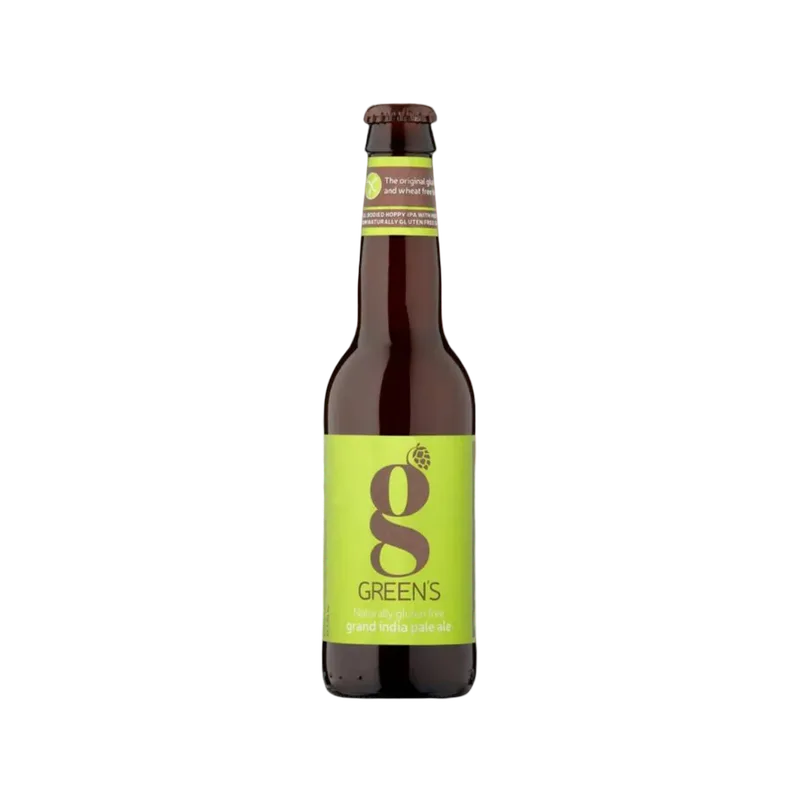
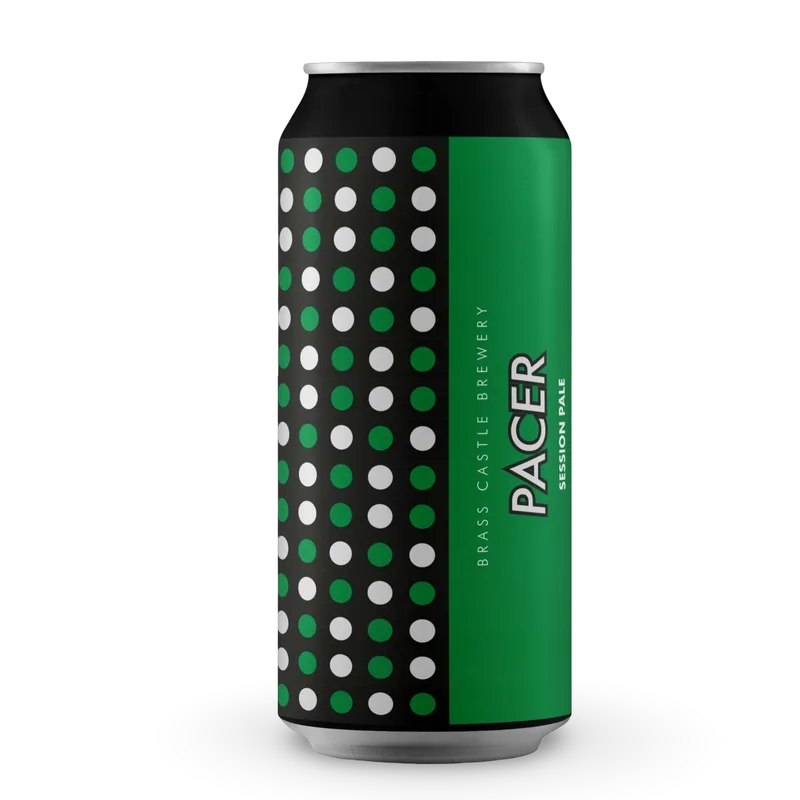
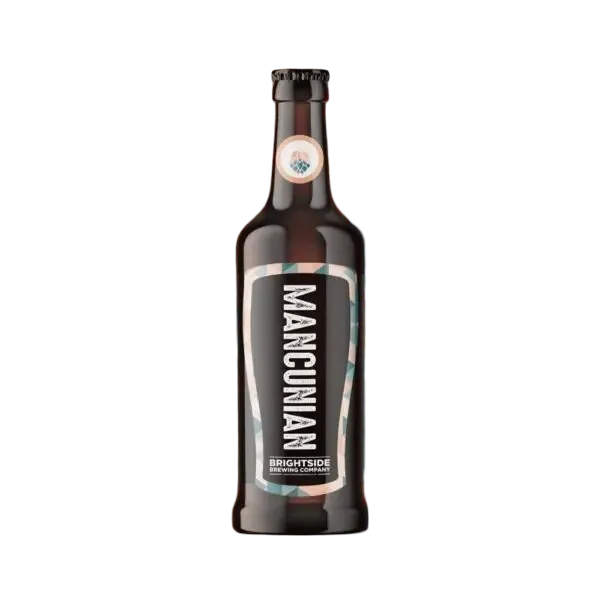
Three points on the scale: Green’s naturally gluten free at 0ppm, Brass Castle brewed to a below 10ppm benchmark, Brightside gluten reduced under the 20ppm limit. None sit at the ceiling, which is the point.
The catch: the maths only works on honest numbers
There is one place this calculation falls apart.
The arithmetic above assumes the ppm figure is real. For naturally gluten free beers and genuinely low certified readings, it is. For barley beers that have been enzyme treated to strip the gluten out, often sold as gluten removed, it is shakier. The standard test struggles to count the small gluten fragments those beers leave behind, so a gluten removed beer can read lower than the gluten it actually holds. You cannot run clean maths on a number you cannot trust.
We have covered that testing problem in detail in our guide to what gluten free beer ppm really means. The short version: if you are coeliac, the safest beers are the ones brewed without gluten in the first place, because there is no fragment to miscount and no maths to second guess.
What this means if you are coeliac
The practical rule is simple. Do not drink to the legal limit. Treat 20ppm as the worst case and seek out the beers that test well below it. A naturally gluten free beer carries no gluten arithmetic at all. A certified low reading beer gives you headroom, three or four pints inside the daily figure rather than tripping it on the first. A gluten free label only tells you the beer is under the ceiling. And even at low ppm, the milligrams add up across a few pints.
This is not medical advice. The 10mg figure is a population benchmark, individual tolerance varies, and your own safe limit is a question for your clinician.
When you want beers that sit at the bottom of that table rather than the top, browse the full directory of UK gluten free beers and start with the naturally gluten free breweries. They are the ones where the maths is on your side.
References
The figures in this guide come from the following sources.
- Catassi C, Fabiani E, Iacono G, et al. A prospective, double-blind, placebo-controlled trial to establish a safe gluten threshold for patients with celiac disease. American Journal of Clinical Nutrition, 2007; 85(1): 160 to 166. PubMed 17209192
- Akobeng AK, Thomas AG. Systematic review: tolerable amount of gluten for people with coeliac disease. Alimentary Pharmacology and Therapeutics, 2008; 27(11): 1044 to 1052. PubMed 18315587
- Rostami-Nejad M, Asri N, Olfatifar M, et al. Systematic review and dose response meta-analysis on the relationship between different gluten doses and risk of coeliac disease relapse. Nutrients, 2023; 15(6): 1390. PMC10057462
- Ad hoc Joint FAO and WHO Expert Consultation on Risk Assessment of Food Allergens: reference doses for cereals containing gluten. Rome, November 2025. Recommends a 4mg gluten reference dose. FAO report
- Codex Alimentarius. Standard for foods for special dietary use for persons intolerant to gluten, CXS 118 to 1979 (revised 2008). Sets the 20mg per kilogram threshold for a gluten free claim. Codex standards
This guide is general information and not medical advice. Individual tolerance to gluten varies, and anyone with coeliac disease should treat their own safe limit as a question for their clinician.
Frequently asked questions
How much gluten is safe per day for coeliac disease?
The most cited figure is 10mg of gluten per day. It comes from a 2007 trial by Catassi and colleagues, which found that 50mg a day caused gut damage in coeliacs (tested over a three month period), while 10mg a day did not produce significant damage at the group level. That number became the basis for the 20ppm legal limit on gluten free food. It is a population benchmark rather than a personal allowance. Later work found some people react below 10mg, sensitivity is individual, and the duration of exposure matters as well as the dose. Treat 10mg as a ceiling to stay well under, rather than a target to drink up to.
How much gluten is in a pint of 20ppm beer?
About 11mg. 20ppm means 20mg of gluten per litre of beer, because beer is close to water density and a litre weighs roughly a kilogram. A 568ml pint is 0.568 of a litre, so 0.568 multiplied by 20 gives 11.4mg. That is already above the 10mg daily figure from a single pint, before you eat anything. A 330ml bottle at the same level holds 6.6mg, and a 440ml can holds 8.8mg.
How many gluten free beers can a coeliac drink in a day?
It depends entirely on the beer's real gluten level, which the label does not tell you. At the legal ceiling of 20ppm, one pint already passes the 10mg daily figure. But almost no certified gluten free beer sits at 20ppm. The better ones test far lower. A beer at 5ppm holds about 2.8mg in a pint, so three or four pints stay under 10mg. A naturally gluten free beer testing at 0ppm carries no gluten limit at all. There is no single fixed number. The practical answer is to choose beers that test well below the ceiling, where the maths stops being tight.
Does 20ppm mean a beer is low in gluten?
It means the beer tests under the legal maximum, which is not the same as testing close to it. 20ppm is the highest gluten level a beer can have and still be labelled gluten free in the UK. Most certified gluten free beers test well below that. Independent and brewery testing commonly puts good gluten free beers in the low single figures of ppm, and naturally gluten free beers at zero. The label tells you the beer is under the ceiling. It does not tell you how far under, and that gap is what decides how many you can drink.
Is the 10mg gluten limit the same for everyone?
No. The 10mg figure is a population average from a single trial, and it does not fit every person with coeliac disease. A 2008 review found some patients developed gut changes at around 10mg a day while others tolerated three times that. A 2023 analysis estimated a small relapse risk even at 6mg a day and stressed that sensitivity is individual. In 2025 a FAO and WHO expert group proposed a reference dose of 4mg for labelling decisions, lower than 10mg. The direction of expert opinion is downward. If you are coeliac, your own tolerance is the number that matters, and that is a conversation for your clinician.
Why does one pint of gluten free beer break the daily gluten limit?
Because the 20ppm limit was designed around food rather than drink. The rule assumes you eat around 500g of gluten free food a day, each item at no more than 20ppm, which keeps your total intake under 10mg. A pint of beer weighs about 568g on its own. At 20ppm that single pint delivers 11.4mg, more than the whole daily budget the rule was built around, in one glass. The 20ppm threshold was never meant for something you drink half a litre of in one sitting. That is why the beers worth choosing are the ones testing well below the ceiling.